A wet basement turns from annoyance to emergency faster than most homeowners expect. Carpets sour, studs swell, and anything cardboard becomes a sponge. In London, Ontario, I see it every spring when the freeze thaws and the Thames River watershed saturates the ground. Some years it’s a slow seep through cinder block joints. Other years it’s a coffee-coloured surge through a floor crack after a night of heavy rain. The right waterproofing strategy depends on how water reaches your foundation, what kind of foundation you have, and how your property handles storms. The choice between interior and exterior methods is not about right and wrong, it is about suitable and sustainable.
This is a practical guide drawn from on-site experience around Old North, Wortley Village, Byron, and the newer subdivisions edging south and west. London has a mix of foundation types and ages, and the city’s clay and silt soils hold water like a sponge. That combination makes basement waterproofing part science, part craftsmanship, and part judgment call.
Why London basements get wet
London sits on heavy, fine-grained soils. Once saturated, those soils drain slowly and push hydrostatic pressure against foundation walls. Frost reaches roughly 1.0 to 1.2 metres in a typical winter, so shallow cracks that look harmless in August can open under freeze-thaw stress by February. Many post-war homes use concrete block foundations. Those blocks are hollow, and they channel water through mortar joints once exterior coatings or old weeping tiles fail. Older century homes in Old East Village and Woodfield have fieldstone or brick foundations with lime mortar that wicks groundwater by capillary action. Newer builds often use poured concrete, which resists wicking but can crack at tie holes, cold joints, or around window wells.
Add roof runoff that dumps near the footing, settled backfill that slopes toward the wall, and downspouts that freeze or clog, and you have a formula for a wet basement in London, Ontario.
If you search for basement waterproofing in London, Ontario, you will see the same terms over and over: interior drainage, exterior excavation, weeping tile, sump pump, foundation crack repair. The trick is understanding which method addresses your specific leak and why.
How water enters a basement
I start by mapping the path. Water follows gravity or pressure. Here are the most common entry points I find around the city:
At the cove joint, where the concrete floor slab meets the foundation wall. If the old footing drain has collapsed or silted up, pressure forces water at the seam. It often shows as a thin dark line after a long rain.
Through wall cracks or tie holes. In poured concrete foundations, vertical cracks often appear at window corners or mid-wall from shrinkage. Tie rods that were used during forming can rust and leak. A small wet spot can bloom into a steady trickle during storms.
Through block cores and mortar joints. With concrete block walls, water collects inside the hollow cores. You may not see water as a stream, but paint bubbles, efflorescence, and damp banding mid-wall give it away.
Through the floor. Groundwater rises under the slab when local water tables lift. This tends to show as damp patches in the middle of the room, not just at the perimeter. In spring, I have measured hydrostatic heads that push water through hairline shrinkage cracks.
At penetrations and window wells. Pipe penetrations, poorly sealed conduits, and window wells without drains become funnels.
This diagnosis matters because interior and exterior solutions solve different problems. Interior systems manage water after it gets through the wall or under the slab. Exterior systems stop water at the source, at the soil-wall interface and the footing.
Interior waterproofing explained
An interior system aims to control and redirect water that reaches the inside of the foundation. The most common setup in London is a perimeter drain channel installed along the inside of the footing. We cut the slab about 30 to 40 cm from the wall, excavate a trench to the footing, lay perforated pipe in washed stone, and direct it to a sump basin. A dimpled membrane along the wall face creates an air gap, letting water drop to the drain. The slab is then re-poured. In block walls, we often drill weep holes in the bottom course to relieve water trapped in the cores. With poured walls, we seal individual cracks using epoxy or polyurethane injections before installing the drainage.
Done right, an interior system keeps the basement dry even if exterior weeping tiles have failed long ago. It is minimally disruptive compared to exterior excavation, especially on lots with mature landscaping or tight property lines. For a typical bungalow, costs in London range widely based on access and length, but interior perimeter drainage often falls between 70 and 160 dollars per linear foot. Adding a sump pump, lid, check valve, and discharge line is a separate line item. Pumps themselves usually land between 1,500 and 3,500 dollars installed, depending on horsepower and whether you add a battery backup.
The trade-off with interior work is philosophical and practical. Philosophically, you are letting water enter and then moving it away. Practically, you are not relieving lateral soil pressure on the wall, and you are not improving exterior grading or drainage. If the wall is already bowing or spalling, interior drainage alone is not a fix. You may pair it with structural reinforcement such as carbon fibre straps or steel I-beams, which is a different scope than waterproofing but often arises in the same conversation.
Interior systems shine in finished basements that can tolerate selective removal of flooring and a strip of drywall. They are also the sensible choice when lateral access is blocked by a shared driveway, a deck you want to keep, or setback constraints. Many London homeowners choose interior waterproofing after a failed attempt at cosmetic fixes such as paint-on coatings. Those coatings almost always peel because they fight hydrostatic pressure with thin film resistance.
Exterior waterproofing explained
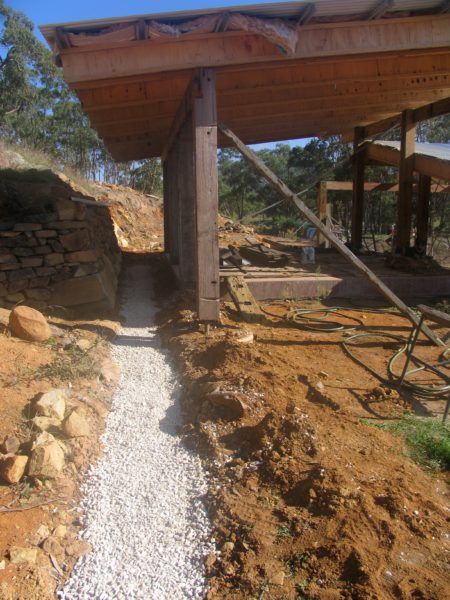
Exterior waterproofing tackles water before it reaches your basement. It means excavating down to the footing along the problem wall, cleaning the foundation, repairing cracks from the outside, applying a durable waterproofing membrane, protecting it with a drainage board, and replacing or installing a new weeping tile system at the footing that drains to daylight or to a sump. We also add washed stone around the tile, bring window wells to code height with drains, and backfill with care. This work takes heavy equipment, shoring or sloping for safety, and attention to details like penetrations and step footings.
In London, the exterior approach is common during major landscaping, additions, or when a wall shows structural movement. If you own a heritage home with stone foundations, the exterior path may be the only path that respects the original materials. For poured concrete foundations with chronic leak points, exterior crack injection combined with membrane and new footing drains yields robust results.
Exterior costs are higher and depend on access, depth, and length. Excavation to full depth, membrane, and new tile often runs in the 200 to 350 dollars per linear foot range or more, with staging, soil disposal, and reinstatement of patios or driveways adding substantially. If you have a walkout or deep footings, the number changes again. Timelines stretch if utilities are in the way or if arborists must be involved. That said, when well executed, exterior waterproofing resets the system to how it should perform. Water stays outside, hydrostatic pressure on the wall drops, and the footing has a reliable drain.
Interior vs. Exterior: how to choose with London conditions in mind
Local soil and climate should drive your decision as much as budget. Here is how I talk it through at the kitchen table.
With block foundations from the 1950s through the 1970s, interior drainage works very well because you can relieve the block cores via weep holes and keep the basement bone dry. If the blocks show horizontal cracking or bulging from clay expansion, we discuss reinforcing. If the wall stands straight and the leak is at the cove, I lean interior.
With poured walls under 25 years old, isolated leaks at cracks or tie holes can be solved from the inside using injection. If there are multiple cracks, the yard traps water, and the weeping tiles are original to the build, I recommend exterior work on the worst wall as a first phase. Many homeowners stage it, one or two walls per year.
For older stone foundations, interior drainage helps manage seepage, but you still want to treat the source. Exterior lime-compatible parging and a proper drainage plane make a big difference. Here, interior-only is a bandage.
A high water table property near low-lying areas of the city or close to the river will see periodic slab moisture regardless of membrane type. A combination approach, interior perimeter drain to a reliable sump with exterior grading improvements and strategic membrane work, gives the best long-term control. Think of it as system redundancy.
Finally, finished basements and tight side yards tilt the calculation. Replacing a kitchenette and restoring custom wet basement london ontario millwork after full-depth interior cuts can tip the budget toward exterior excavation along a garden bed if machine access is good.
Costs, expectations, and what “dry” really means
Homeowners often ask for a ballpark. You can waterproof 30 linear feet from the interior with a drain channel and sump for as little as 5,000 to 9,000 dollars if access is clear and the layout is simple. Exterior work on the same length might span 8,000 to 15,000 dollars or more once you account for digging, trucking, membrane, tile, and restoration. Complex projects run higher. Toronto prices tend to be steeper than London’s, but materials and labour have climbed across Southwestern Ontario in the past five years.
Define what dry means for your family. If you store photo albums on the floor, zero tolerance for moisture demands a belt and suspenders approach. If the space is unfinished storage and you primarily want to stop puddles during storms, a targeted interior fix may be plenty. I always set sump pump expectations clearly. Pumps have moving parts. In London’s storm patterns, they can cycle dozens of times per hour during a summer downpour. A decent pump installed to spec with a dedicated circuit, check valve, and proper head height should last 5 to 10 years. Battery backups cover you during power cuts, which often coincide with storms. Expect to test backup systems twice a year and replace batteries every 3 to 5 years.
Discharge lines matter as much as the pump. The Ontario Building Code and local bylaws prohibit tying sump discharge into the sanitary sewer. London has enforced disconnects in many neighbourhoods to protect the wastewater system. Discharge lines should carry water at least 2 to 3 metres from the foundation, ideally to a splash pad or lawn that slopes away. In winter, exterior check valves can freeze. We often spec an air gap or freeze relief to keep the pump from deadheading against ice.
Common misdiagnoses I see in London
It is easy to blame the wall when the roof is the culprit. I have traced dozens of “foundation leaks” back to an overflowing eavestrough that dumped at a single corner above a hairline crack. Another frequent miss is an undersized or misgraded window well. If the well sits below grade without a proper drain to the footing tile, it becomes a bathtub in heavy rain and pours in around the frame.
Slab moisture and humidity also get misread. Basements run cooler, so summer air can dump moisture on cooler surfaces and look like seepage. I carry a moisture meter and a hygrometer. If relative humidity sits above 60 percent in July and the cool floor shows dampness after a hot day without rain, you are chasing condensation. Dehumidification and air sealing around rim joists can fix what looks like a leak.
Finally, coatings hide trouble for a short while. I have chipped off elastomeric paint in Byron to find rotted parging and open mortar joints beneath. Paint is not waterproofing. It can be a vapor retarder in a full system, but it is not a fix on its own.
A brief comparison to anchor your decision
- Interior systems excel when access is limited, the basement is finished, or leaks come from the cove joint or block cores. They are cost effective, quicker to install, and pair well with sump pumps and humidity control. Exterior systems excel when the wall itself is the source, you can excavate safely, and you want to stop water at the soil interface. They reduce hydrostatic pressure and refresh the footing drains, which protects structure as well as dryness. If the foundation shows bowing or advanced deterioration, exterior work plus structural reinforcement takes priority over interior drainage. Isolated cracks in poured walls are fair candidates for interior injection, but repeated leaks across a wall push the choice toward exterior membrane and new weeping tile. High water tables and slab moisture often require a combination approach, interior drain to a sump plus exterior grading, extended downspouts, and selective exterior membrane.
What interior work looks like, step by step
On a block wall in Old North with a finished rec room, we start by protecting the living space. Flooring and baseboards come up along the perimeter. Drywall is cut a few inches above the planned trench. The saw cut is dusty and loud for a short stretch, then we excavate to the footing, place a perforated PVC or HDPE drain line bedded in clean 19 mm stone, and create a continuous path to the sump basin. We drill small relief holes in the bottom block course to drain water from the cores. A dimpled drainage mat goes on the wall to guide future water down. After a leak test and flushing the line to the basin, we pour back the slab, often with fibre mesh for crack control. Sump pumps get their own GFCI-protected circuit. The discharge line exits above grade, slopes away, and ends at a splash block. We seal and finish, then coach the homeowner on testing the pump and setting a dehumidifier at 45 to 50 percent RH.
On poured walls, we pair this with epoxy or polyurethane crack injection. Epoxy bonds the concrete and restores structural continuity, best for hairline to moderate cracks that are dry or nearly dry at time of injection. Polyurethane foams on contact with moisture and is better for active leaks. We install surface ports, inject under moderate pressure until the material appears along the crack length, then remove ports and patch. If the crack extends below the slab, the interior drain captures any residual flow.
What exterior work looks like in practice
A job in Wortley Village last year involved a 1920s poured wall with multiple tie hole leaks and a patio that had settled toward the house. Access was good along the side yard. We called for locates, staged plywood to protect the lawn, and excavated to the bottom of the footing, which was about 7 feet down. The wall had rough parging and several open tie holes. We cleaned the concrete, filled tie holes with non-shrink grout, and applied a rubberized membrane rated for below-grade use. A rigid drainage board over the membrane protected it from backfill and provided a capillary break. We replaced the weeping tile with perforated pipe bedded in clear stone, wrapped in a filter fabric to restrict silt intrusion. The window well got reset at the correct height with a drain down to the tile. Backfill was compacted in lifts and regraded to pitch away from the house a minimum of 5 percent over the first two metres. The homeowner reported a dry basement through the following spring, and the patio no longer held a puddle.
Exterior work needs attention to details you do not see after the trench is closed. Membranes must lap https://hectorxjlv641.theburnward.com/foundation-repair-london-ontario-methods-materials-and-timelines correctly at seams. Step footings must be bridged with care. Penetrations for gas and electrical service require compatible sealants. If you skip these, the system fails at a point you cannot reach without more digging.
What to fix first if you have a wet basement in London, Ontario
Before you pick a method, control the easy variables. Extending downspouts to discharge well away from the foundation can cut water loads dramatically. Regrading a negative slope so water moves away from the wall pays for itself. Cleaning gutters and fixing a disconnected elbow costs less than any interior or exterior system. These measures do not replace proper waterproofing if the weeping tile is failed or the wall is cracked, but they often reveal whether your wet basement is a drainage problem or a structural one.
If you face a sudden flood, remember that the first 24 to 48 hours matter. Mold will not wait. Pull up carpet, run fans and a dehumidifier, and call for help. Once the space is dry and safe, bring in a contractor who will test, not guess. In my practice, that means probing the wall with a moisture meter, checking for efflorescence patterns, opening a small inspection point at the cove, and sometimes running a hose test outside to simulate rainfall. A wet basement in London, Ontario can have more than one cause, so gather evidence before you commit.
What local codes and programs mean for your project
The Ontario Building Code requires drainage around foundations where hydrostatic pressure is expected, and it sets standards for materials and slopes. For existing homes, you are not retrofitting the OBC wholesale, but smart contractors build to those principles. In London, sump pump discharges must not connect to the sanitary sewer. Some municipalities across Southwestern Ontario have offered subsidies for backwater valves or sump systems to reduce basement flooding impacts on public infrastructure. Programs change year to year. Check the City of London’s website for current offerings and rules before you plan your scope. If your street has a history of sewer surcharging during storms, ask about installing a backwater valve on the sanitary line. Pairing a backwater valve with a sump and interior drainage can be a powerful combination for flood-prone blocks.
Practical details that separate solid work from short-lived fixes
Small decisions add up. I specify 1.5 inch discharge lines for most residential sump pumps to reduce friction losses and keep the motor from overworking. I like basins with sealed lids for safety and to control humidity and radon. I avoid corrugated interior drain tile on the exterior because it crushes under backfill and clogs with silt. I go with smooth-walled perforated pipe with the perforations oriented correctly, surrounded by at least 150 mm of clean stone. Filter fabrics matter in London’s fines-laden soils, but use them judiciously to avoid blanket clogging over time.
On interior jobs, I bring the drainage mat up behind studs so any future condensation or incidental water has a path down to the drain, not into insulation. I set sump floats to avoid short cycling. On exterior work, I pay attention to downspout leaders, making sure they do not discharge into new trenches where they can overwhelm the system. And I document where every line runs for you, with photos and a drawing. The day you plan a future egress window, you will want to know where that pipe sits.
A short checklist before you call for basement waterproofing
- Walk the perimeter during rain and look for overflow points at eaves, downspouts, and low spots that collect water. Inside, note exactly where water appears and when, cove joint, mid-wall, or centre of slab, during storms or steady weeping regardless of rain. Check grading with a straight board and level to confirm slope away from the foundation for at least two metres. Look for signs of structural stress, long horizontal cracks in block, stepped cracks, or bowing, which change the conversation. Gather any history you have, age of home, known weeping tile replacements, past crack injections, or sewer backup incidents.
Final thoughts from the jobsite
When homeowners search for basement waterproofing in London, Ontario, they are often staring at a wet carpet or a stack of soggy boxes. It is tempting to chase the cheapest or fastest fix. Sometimes that works. A single crack injection for a poured wall that only leaks after wind-driven rain can be a one-day, one-receipt solution. Other times, especially with failed exterior weeping tiles on a block wall, you need a plan that manages water every day of the year. The best contractors explain the trade-offs clearly, write scopes that match the diagnosis, and stand behind their work when the spring thaw puts it to the test.
Whether you choose an interior system that directs water to a reliable sump or an exterior rebuild that resets membranes and drainage, insist on details. Ask how they handle corners, penetrations, and discharge routing. Ask what happens in a power outage and what maintenance looks like after year five. A dry basement is not an accident, it is the product of a system built for your soil, your house, and your habits. Done with care, you stop treating your basement as a liability and start using it as the comfortable, healthy space it was meant to be. If you live with a wet basement in London, Ontario, that shift is worth the planning. And if your foundation needs more than waterproofing, such as foundation repair in London, Ontario for structural issues, address that first, then make the water behave.
Ashworth Drainage — Business Info (NAP)
Name: Ashworth DrainageAddress: 514 Hale St, London, ON N5W 1G8
Phone: (519) 660-9375
Website: https://www.ashworthdrainage.ca/
Email: [email protected]
Hours:
Monday: 9:00 AM – 5:00 PM
Tuesday: 9:00 AM – 5:00 PM
Wednesday: 9:00 AM – 5:00 PM
Thursday: 9:00 AM – 5:00 PM
Friday: 9:00 AM – 5:00 PM
Saturday: Closed
Sunday: Closed
Open-location code (Plus Code): XRR3+HV London, Ontario
Map/listing URL: https://maps.app.goo.gl/9kaoXAxRtJRP1ThS9
Embed iframe:
Socials (canonical https URLs):
Facebook: https://www.facebook.com/ashworthdrainage/
X: https://twitter.com/ashworthrules
Instagram: https://www.instagram.com/ashworthdrainage/
https://www.ashworthdrainage.ca/
Ashworth Drainage provides basement waterproofing and foundation repair services in London, Ontario and surrounding areas in Southwestern Ontario.
The company helps homeowners address wet basements, water intrusion, and drainage issues with solutions that fit the property’s conditions.
Service requests can include foundation repair, waterproofing options, sump pump and drainage-related work, and related assessments.
Ashworth Drainage is based at 514 Hale St, London, ON N5W 1G8.
To reach the team, call (519) 660-9375 or email [email protected].
Business hours are Monday to Friday 9:00 AM–5:00 PM, with the office closed Saturday and Sunday.
For directions and listing details, use the map listing: https://maps.app.goo.gl/9kaoXAxRtJRP1ThS9.
Popular Questions About Ashworth Drainage
What does basement waterproofing help prevent?Basement waterproofing is intended to reduce water intrusion and moisture problems that can lead to dampness, leaks, odors, and damage over time.
How do I know if I may need foundation repair?
Common signs can include visible cracks, water seepage, shifting or uneven areas, or recurring moisture problems; an on-site assessment is usually the best way to confirm causes and options.
What areas does Ashworth Drainage serve?
Ashworth Drainage serves London, Ontario and surrounding areas in Southwestern Ontario.
What are Ashworth Drainage’s hours?
Monday–Friday 9:00 AM–5:00 PM; Saturday closed; Sunday closed.
How can I contact Ashworth Drainage?
Phone: +1-519-660-9375
Email: [email protected]
Website: https://www.ashworthdrainage.ca/
Map: https://maps.app.goo.gl/9kaoXAxRtJRP1ThS9
Facebook: https://www.facebook.com/ashworthdrainage/
X: https://twitter.com/ashworthrules
Instagram: https://www.instagram.com/ashworthdrainage/
Landmarks Near London, ON
1) Kiwanis Park2) Western Fair District
3) Covent Garden Market
4) Victoria Park
5) Budweiser Gardens
6) Museum London
7) Fanshawe Conservation Area